

José María Peredo Pombo
Although progressive critics present the document as disruptive and MAGA, the text has a broad economic and geostrategic meaning that may transcend Donald Trump’s presidency. In an order that is already geoeconomic, the United States is committed to stabilizing and leading it during this term. To this end, it is promoting its energy and technology sectors, balancing its trade balance, maintaining its alliances (NATO, QUAD, bilateral), but demanding a shared effort and making the Western Hemisphere its main regional objective.
For so many years, the Russians, Chinese, and Iranians wanted the United States to leave Europe, Asia, and the Middle East, and now they may be the ones to leave America, its borders, and its networks. That is the main innovation of the 2025 strategy: to secure America in a broad geopolitical space (probably up to the Arctic); with new key axes for national interest (the Panama Canal, ports, or bases); without spies, drugs, or illegal immigrants; and with vast material resources and markets.
And the consequence of this more secure and Americanized Western Hemisphere, thanks to this strategy that the document calls the “Trump Corollary” to the Monroe Doctrine, will be the weakening of Chinese economic leadership and the end of Russian or Iranian destabilization in the region.
The geo-economic strategy does not stop there, but extends to Southeast Asia, where it proposes to accelerate investment and economic activity shared with allied countries and also with India.
Freedom of navigation and trade in the region remain a priority, and therefore the security of Taiwan and the Pacific front line (Japan, South Korea, and the Philippines) will be reinforced by US technology and defense against any Chinese hegemonic attempts.
And the allies’ contribution to that defense will be greater. However, China is not identified as a rival to be contained, but rather as a competitor with which trade is possible, even in semiconductors. Its reintegration into the markets will not come about through a tariff war, but rather through a strategic restructuring of the global economic order, in which China can consume part of its production surplus itself, so as not to saturate global markets.
This economic competition with China, reinforced by active and vigilant stability in Asia, also extends to the Global South. To this end, the document calls on the countries of Europe, Japan, and Korea to set objectives and reconfigure institutions (international banks) that will balance China’s commercial and infrastructure advantage and activate Western investment in projects with low- and middle-income countries, based on criteria of national interest, not subject to demands for political and democratic transformation. What has traditionally been called pragmatism in US trade diplomacy is referred to as “flexible realism” in the geoeconomics of 2025.
The explicit refusal to promote Western values globally and the explicit respect for cultural (beliefs) and political (authoritarianism) diversity does not mean that the White House is giving up on using public diplomacy and soft power to project an image of America as a reliable nation in its trade agreements and as a political culture that generates progress and well-being.
America not only has to be “first,” but it also has to be perceived as “best” if it wants to combat and reject the perverse influences that seek to destabilize its society.
For the White House, Europe is an example of this cultural weakening that has proliferated due to the lack of political responses to the uncontrolled influx of immigrants, ideas, and foreign influences. The most controversial part of the strategic document is precisely the call to strengthen parties and leaders who will restore European patriotism, warning of the Trump administration’s preference for countries that best adapt not only to American interests but, in the case of Europe, also to its ideology.
Although the National Security Strategy does not forget European democracies and their value as allies in a future renewed order of powers, the priority in 2025 is to stabilize the region, ending the war in Ukraine and diplomatically promoting a rapprochement between European countries and Russia, whose strategic or nuclear threat is not mentioned in the text.
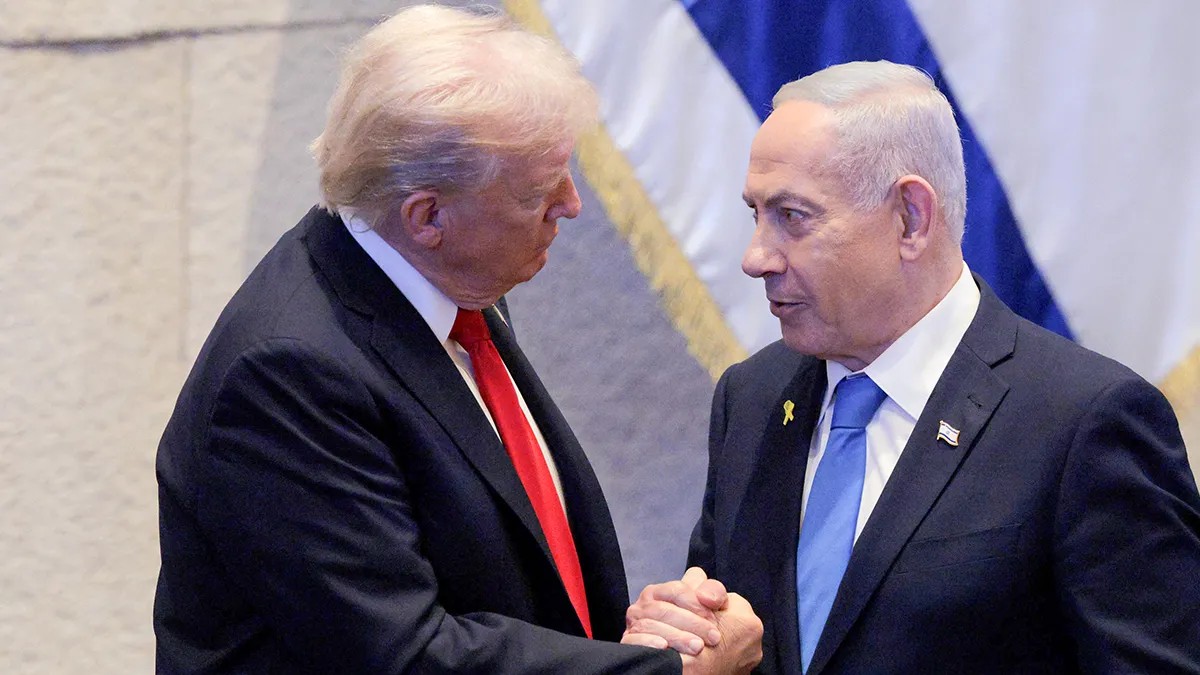
With the exception of the Israeli-Palestinian conflict, the Middle East is a region that, from the American perspective, is considered to have been definitively reconfigured through technological, economic, and defense cooperation with regional allies.
The 2025 document reinforces and clearly defines the American national interest in the defense of Israel and in open navigation in regional straits and seas. However, it does not clearly identify certain specific risks, such as tensions between minorities or threats from specific groups or countries, which only appear implicitly in the document.
Finally, the 2025 Strategy confirms an increase in defense spending to modernize and incorporate AI into all traditional systems and increase the deterrent capabilities of the United States against major powers and threats. But also to produce new guerrilla warfare weapons (drones) and self-sufficient ammunition.
From submarines to fighter jets and from missiles to soldiers, the aim is to improve accuracy in order to damage the enemy more selectively and more lethally, which, according to the document, is found both in potential rival armies and on domestic borders and in cyberspace.
Donald Trump’s leadership is progressing satisfactorily and his economic imprint is permeating National Security. But the 2025 document is overly optimistic in some respects. If idealism and liberal principles disappear completely and only the national interest defines strategy, powers and allied countries will have to act accordingly. And in that competition of interests, alliances may be reconfigured and oriented toward other powers, both regionally and strategically and globally.
And if the actions of leaders and regimes such as Putin and Iran are not explicitly denounced, and no reference is made to the limitations of power through international norms, any dictator and any power in any region can conceive of their national interest without regard for human dignity.
The Strategy is very explicit in excluding climate change as a national and global security issue, and very decisive in putting an end to the global phenomenon of immigration. To stabilize the world, its movement must be stabilized. But it is not decisive in identifying allies in Africa, risks in the Middle East, or threats in the Sahel and the Baltic.
Trump can still improve his leadership if he understands that, in an open and complex world, human and political conditions are not constant, even if artificial technology says otherwise. When the United States thought globally in the 1990s, terrorism attacked it locally. And when it fought terrorism in the Middle East, the great Eurasian powers grew strong in other regional markets. That is why a strategic security document not only shapes a (geoeconomic) project, but also warns of risks and identifies those that threaten a country, as well as global society.